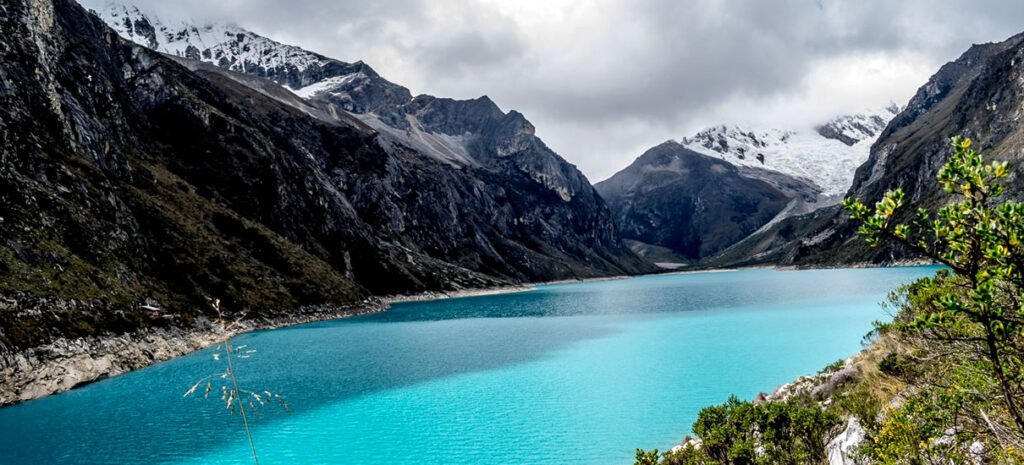

Callejón de Huaylas tour starts at 8:30 am and travel north through the province of Huaylas until we reach Paron Lake, one of the largest and most beautiful lakes of the Cordillera Blanca.
As we get closer, we’ll see the stunning landscapes of the snow-capped peaks of Caraz and Piramide. We’ll continue driving towards the northeast of the Callejón de Huaylas until we reach the town of Caraz, from where we’ll begin the ascent by minibus to the lake.
Once there, we’ll start walking for about an hour and a half along the left side of the lake. On the hiking route, we’ll see the best landscapes of the Cordillera Blanca and the impressive Paron Lake, the largest natural freshwater reservoir in the region.
You’ll have half an hour of free time at the lake to rest and enjoy the scenery. Then, we’ll start the hike back to Caraz, where we’ll enjoy a traditional sweet, the famous manjar blanco!
Finishing our Perudestino tour, we’ll return to your hotel in Huaraz, finishing the excursion around 5:30 pm.


Beyond its natural beauty, Parón Lake in Callejón de Huaylas also symbolizes the delicate balance between human needs and environmental preservation in the Andes. In past decades, the lagoon was briefly used for hydroelectric purposes, which sparked debates over the impact on local ecosystems and water availability. Today, stricter protections ensure that its waters remain primarily a natural treasure and a source of pride for the surrounding communities. For visitors, this history adds depth to the experience: appreciating Parón is not only about admiring its turquoise surface, but also about recognizing its importance as a living, protected legacy of Peru’s highlands.


also it is called «Laguna Parón: The Turquoise Gem of the Peruvian Andes»
Additionally high in the Cordillera Blanca of the Peruvian Andes lies one of the most breathtaking natural wonders in South America: Laguna Parón in Callejón de Huaylas, situated at an altitude of approximately 4,200 meters (13,780 feet) above sea level, this turquoise lagoon is the largest lake in the Cordillera Blanca and one of the most iconic attractions near the mountain town of Huaraz. With its striking color, dramatic mountain backdrop, and tranquil atmosphere, Laguna Parón offers visitors an unforgettable experience in one of the most spectacular alpine landscapes in the world.
A Jewel of the Cordillera Blanca
The Cordillera Blanca, located within the Huascarán National Park, is renowned for its snowcapped peaks, glaciers, and pristine lakes. Among them, Laguna Parón stands out not only for its size but also for its accessibility and beauty. Measuring about 3.7 kilometers in length and 600 meters in width, the lagoon is surrounded by towering mountains that rise dramatically from the water’s edge. The most prominent of these peaks is Artesonraju (6,025 meters), often said to be the inspiration for the famous Paramount Pictures logo. Other majestic summits, such as Pisco, Chacraraju, and Huandoy, frame the lagoon like a natural amphitheater, creating a postcard-perfect view that has captured the imagination of photographers and adventurers alike.
The Turquoise Waters
What makes Laguna Parón truly unique is the intense turquoise color of its waters. This vibrant hue is caused by the high concentration of dissolved minerals and fine glacial sediments carried into the lake by meltwater. Depending on the season, weather, and angle of the sun, the lagoon can shift from bright turquoise to deep aquamarine, offering an ever-changing palette of colors that fascinates all who visit. The contrast between the turquoise surface, the white glaciers above, and the dark granite cliffs creates a visual spectacle that feels almost surreal.
Adventure and Exploration
Laguna Parón is a paradise for outdoor enthusiasts. The journey to the lagoon itself is an adventure: travelers typically depart from Huaraz and drive through the Callejón de Huaylas, passing traditional Andean villages and fertile valleys before ascending a winding dirt road that leads to the lake. Once at the lagoon, visitors are free to explore at their own pace.
One of the most popular activities is the short hike to the lookout point on the eastern side of the lake. In just 30 to 40 minutes, hikers reach a rocky vantage point that offers panoramic views of the lagoon and surrounding peaks—a perfect spot for photography. For those seeking a greater challenge, Laguna Parón also serves as a starting point for longer treks into the Cordillera Blanca, including routes toward Artesonraju and other nearby peaks.
Kayaking on the tranquil waters is another unforgettable experience. From the middle of the lagoon, one can fully appreciate the scale of the mountains towering above and the silence that envelops this high-altitude sanctuary.
Flora and Fauna
Despite its high altitude, the area around Laguna Parón is home to unique Andean flora and fauna. Visitors may spot quenual trees, known for their reddish bark and resilience in harsh conditions, as well as colorful wildflowers that bloom in the alpine meadows during the dry season. Birdwatchers will delight in sightings of Andean geese, giant hummingbirds, and even the majestic Andean condor, which sometimes soars over the valley. The pristine environment of Huascarán National Park makes Laguna Parón not only a scenic destination but also an important refuge for biodiversity in Perú.
Cultural Significance
For the local communities of the Callejón de Huaylas, Laguna Parón is more than just a tourist attraction. It is part of their natural heritage, deeply connected to the traditions, legends, and livelihoods of the Andean people. The lake is also a vital water source, feeding rivers and valleys that sustain